While many are seduced by the mystique world of luxury, not many know that it was one of the last industries to arrive at the e-commerce party. Brands were initially hesitant, fearing that online mass access would dilute their exclusivity and the unique in-store experience that defines luxury shopping.
Driven by the fear of the unknown, almost each of them waited to see who would lower the guards first; it was Gucci who dared to do so. Today, certain powerful postcodes in the UK, US, and EU are eligible for delivery of dream-worthy, luxe offerings in under 30 minutes (challenging local pizza delivery claims!)
It’s been almost 25 years since, that luxury is again standing on the helm of recalibration. With most powerhouses having witnessed both or at least one of the two world wars, relevance becomes an unescapable quicksand. What does recalibration and relevance in 2026 look like? Which brands will retain their power seats, and which brands might have to leave the table for a while? Let’s nosedive…
Tariff turbulence
The red carpets, the magazine covers, the galas, the weddings, or even the most (elevated) basic airport looks have made fashion the most visible sector of luxury. A picture clicked through Google Lens, OpenAI, or simply Ray-Ban Meta sunglasses will tell you what your favourite celeb is spotted wearing. However, in 2026, overall luxury is expected to improve modestly, while the fashion segment is predicted to achieve low single-digit growth, owing to tariff turbulence.
For luxury fashion brands overly dependent on countries like India and Bangladesh for production, the tariff news reignited the nightmares of the pandemic, where survival was achieved through a completely new modus operandi. These brands might largely include apparel and shoes. Fortunately enough, brands like Louis Vuitton and Chanel have seemingly "dodged the worst" (being an exception to a previously threatened higher tariff of up to 30% to 100%), as they were ultimately subjected to the new 15% duty on their products imported into the US. As cited by McKinsey, the EU had pushed for a "zero-for-zero" tariff deal (complete exemption) for luxury brands, which did not materialise.
The same report also recommended shifts such as price changes, shifting sourcing, and automation in an effort to counteract the impact. Naturally, this has also put a spotlight on luxury ‘pre-loved’ possessions, which are expected to grow manifold, giving rise to newer, modular brands like Farfetch’s ‘pre-owned’ offerings.
What if this is a blessing in disguise for ‘Made in USA’ labelled brands?
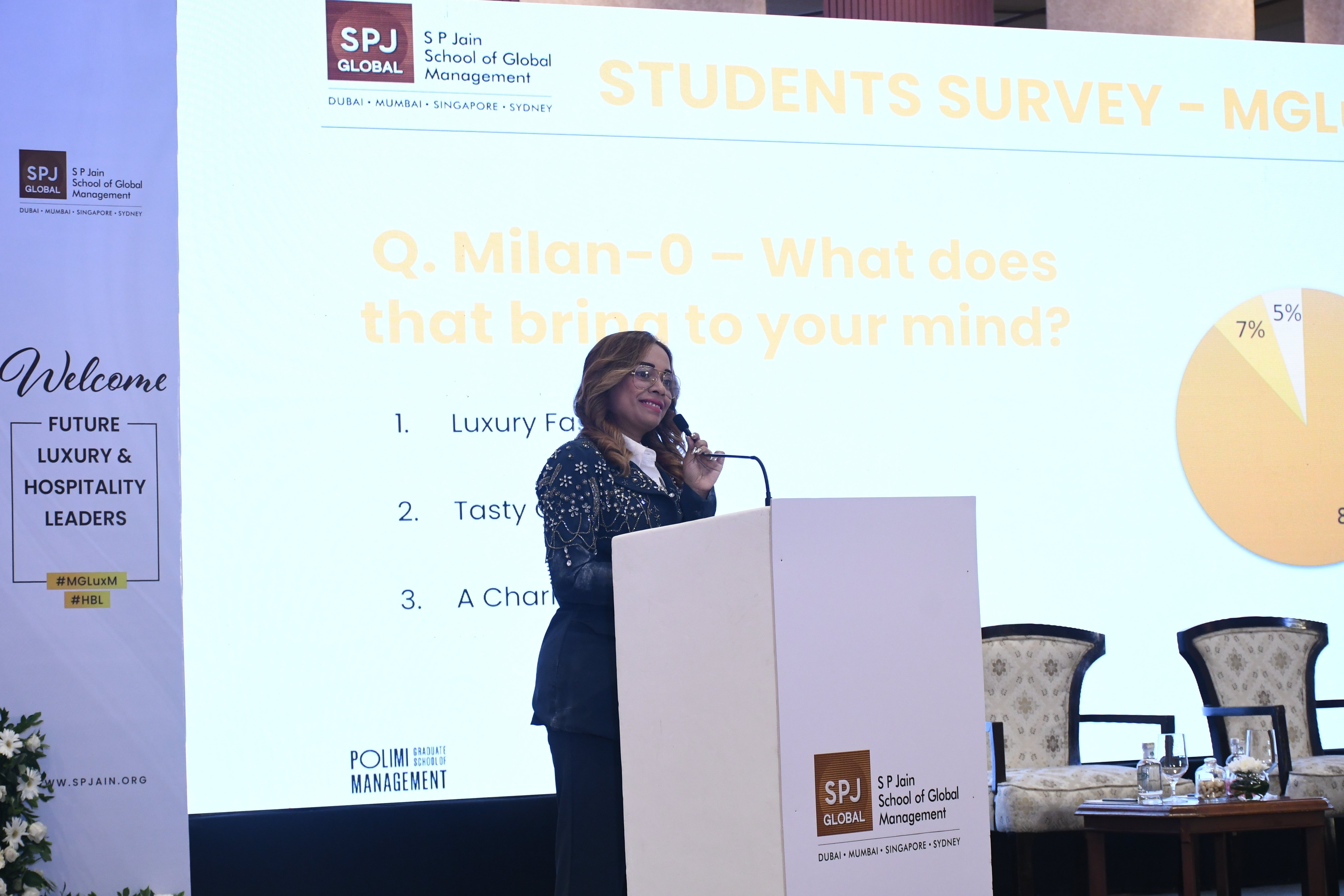
But let’s not make this another drab report on the tariff mayhem. At MGLuxM, we don’t position luxury as a category under fashion, but rather as an umbrella encompassing it. This ideology, coupled with the business school culture reflected in our all-encompassing pedagogy and industry immersions, aims to expose students to all sectors and opportunities that the luxury industry has to offer. Beyond fashion (apparel, perfumes, watches, jewellery, and leather goods), students are also introduced to the proceedings of luxury automobiles, real estate, hospitality, art auctions, and more.
Identity reboot and culture plug-in
In one of the sessions on ‘Luxury in Emerging Markets, ’ an MGLuxM student pointed out how luxury keeps changing definitions dynamically. And rightfully so! While the early 2000s equated it with exclusivity and affluence, it was between 2020 and 2025 that ‘craftsmanship’ was celebrated as the middle name of most luxury brands. 2026, however, challenges this with a heavy focus on ‘identity and culture’.
After an intense game of musical chairs between creative directors, that 2025 saw in its latter months, luxury brands are undergoing a creative reboot as you read. Luxury brands are gently manoeuvring the tricky territories of digital nomads (millennials and gen z) and trying to understand what the right projection would be. Should one remain silent like Loro Piana or democratic like Mercedes-Benz and BMW, introducing innovative online purchasing options, for the first time, for automobiles?!
2026 will inevitably push the brands into a year of dislocation, if not disruption. In a flat market, only those brands will soar that capture the hearts and minds of customers while they grow and gain market share. This lingering effect is best achieved by thinking inwards – what the brand believes, represents, and stands for – rather than the outer shine. Brands like Maison Margiela, Six Senses, and Nishane are blending this unique identity with product discovery, giving every reason for young luxury shoppers to relate to them. Luxury brands with an indomitable identity and a strong focus on representation and culture are naturally more adept at community building. That is the reason why we found ourselves roaring and applauding the history-making moment when French luxury house Chanel opened its show with an Indian-origin model.
Gig economy
More and more would-be luxury shoppers are focusing on their personal wellness, encompassing body, mind, and health — a trend we first highlighted in 2017, which later evolved into a full-fledged subculture in the wake of the pandemic. Today, the value shift among younger generations has prompted luxury brands to prioritise spending on experience creation (travel, food, music, personal growth-centric events, and content) for the memories and emotions they evoke, rather than just possessions. From YSL’s Beauty Station at Coachella to Ralph Lauren and Range Rover’s Wimbledon presence, luxury brands are expanding into immersive realms such as entertainment (concerts), education (workshops), escapism (theme parks), or aesthetics (art galleries), beyond their coveted products.
As Longines, Martell, and Rémy Martin gallop into the Year of the Fire Horse, with special releases, 2026 will belong to the brands that unleash their retention strategies, such as price changes, automation, cultural plug-ins, and flex their experience muscles.
What are your thoughts?
About the author:
Prof Ankita Brahmi is the Deputy Director of the Global Luxury Goods & Services Management (MGLuxM) program at SP Jain Global.
Recommended Reads:
Breaking into the Luxury Industry: Career Paths You Didn’t Know Existed
Challenges within the luxury industry – changing media landscapes
My Transformational Journey at SP Jain Global: From A Student to A Luxury Brand Professional

.jpeg)